A First for Ergon Asia: Interns Gain International Experience

At Ergon, we are dedicated to investing in future leaders. Through interactive, hands-on engagement, we aim to provide opportunities that help students gain invaluable knowledge and develop expertise for their professional careers. 

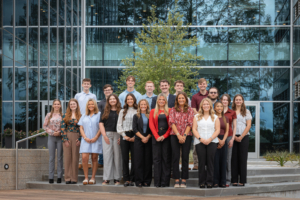
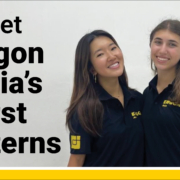
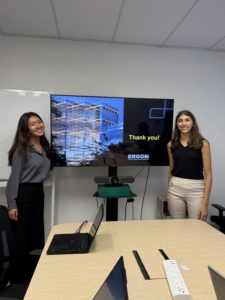
Ergon Asia hosted the first class of interns in April 2026 as part of an eight-week internship program. This opportunity allowed two students to learn about our operations, processes and companies around the world. We appreciate our interns’ commitment to gaining real-world experience and connecting with industry professionals. 

An Opportunity Like No Other 

As Rhyan Plumlee, Vice President – Sales, noted, Ergon partners with Global Academic Ventures (GAV) to help bring study abroad opportunities to students around the world. GAV assists applicants by connecting them with companies, interviews and learning opportunities. They reached out to see if Ergon Asia would be interested in hosting interns 

For Hope Rosen and Jozelyn Chen, Ergon Asia’s first two interns, it was an opportunity they simply couldn’t pass up. 

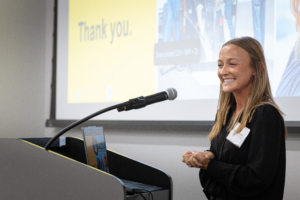
“Being one of the first interns here is really cool because everyone here is just so kind and so sweet,” Hope said gleefully. 

The New Jersey native and junior at Elon University, studying supply chain management and economic consulting, shared that the opportunity stood out from the beginning. “The employees were so welcoming, and it seemed like they had exciting projects in store for us. I feel like we’ve been able to work on a lot of interesting and insightful projects,” Hope said. 

Hailing from Long Island, New York, Jozelyn Chen, a senior at Bucknell University majoring in accounting with a minor in Chinese, shared similar sentiments. 

“Ergon was one of the only companies that asked me, ‘How did this impact your life? How did studying abroad previously impact your personal and professional career?’ Jozelyn shared. “Being the only company that asked me those questions, I felt a warm presence from them. They wanted to get to know me and work with me. But this was an interactive experience, too. I would get to work with a company and integrate myself within their operations, which was what I wanted.” 

And they did just that. 

________________

________________

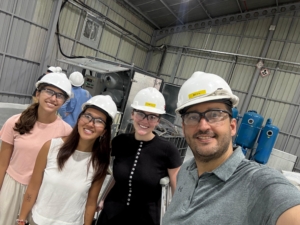
The first day started with in-depth research into Ergon’s history, operations and functions. 

“I learned how operations worked in the oil industry, especially transformer oils. I also learned about supply chain management, along with demand and forecasting,” Hope noted.

Then it was time to take it up a notch. 

“For demand planning, I was able to work on projects analyzing incoterms and free trade agreements (FTAs). Jozelyn and I worked on that together. Another thing I’ve been doing is creating a weekly newsletter, updating everyone on what’s currently happening in the supply chain,” she continued.  

Jozelyn loved having the opportunity to gain additional finance experience and expand her horizons outside her comfort zone. She also participated in acquisition target analysis and researching companies.

________________

________________

Home Away From Home 

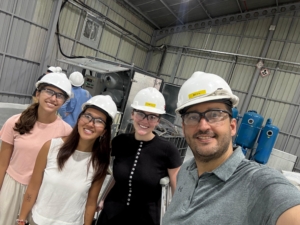
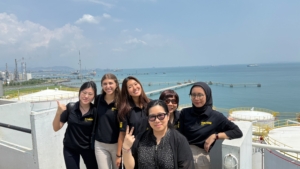
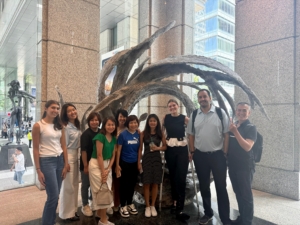
Thousands of miles from home, Ergon’s family-like culture created a familiar feeling. From sitting in on meetings and listening to the Ergon Asia team collaborate, Hope and Jozelyn said they were fully integrated into project planning, forecasting and team bonding activities. 

“A bunch of people from the office all went on a bike ride together at one of the parks, and then we went out for seafood afterward. It was fun getting to bond. When it was my birthday, everyone surprised me with a cake. When they say the Ergon culture is like family, I feel like it truly is because everyone just bonds together, and the environment is just so great,” Hope reflected. 

Jozelyn added, “It shows a lot of their dedication to helping us grow and helping us learn. They took the time to meet with me and talk through my projects and what they do. It was really helpful, too.” 

________________

________________

Looking Ahead to the Future 

As their internship with Ergon Asia approached its final week, each took home an invaluable experience that will guide them in their career paths. 

“One thing that I’ll definitely apply to my career journey is finding an environment that mirrors Ergon,” Jozelyn said. “Also, working with so many of the financial aspects and interpreting and researching finances for Ergon broadened my horizons into looking beyond accounting and exploring what else I could do outside of typical industries.” 

“I’ve learned what type of leadership I want to look up to and what type of leader I would potentially want to become one day. I learned a lot more about global shipping and truly how current events impact everyday supply chain activities,” Hope added. 

After wrapping up their experience as Ergon Asia’s first interns, they shared a piece of advice for students interested in studying abroad: Take advantage of every opportunity, learn the ropes and connect with your team members. We remain committed to investing in future generations so they, too, can not only learn about our organization, but become leaders across several fields in our industry.

________________

Good luck, Hope and Jozelyn!

________________

The Advantage of Flexibility in Logistics

Read Executive Vice President – Integrated Services & Logistics Joel Pastorek‘s latest LinkedIn article, as shown below, sharing why flexibility is so important in the logistics industry.

________________

It’s easy to overlook logistics when everything is working the way that it should. 

Most people don’t realize how much of daily life depends on it. Goods don’t simply show up where they’re needed. They are moved, stored, coordinated and delivered by people doing work that is often out of sight, but always required. 

But when it’s not working, you notice it quickly. Businesses, communities, families and individuals feel it when something they rely on doesn’t show up when it should.  

Efficiency has always been the focus in logistics, and for good reason. But at some point, efficiency alone isn’t enough. Systems have to be able to adjust when conditions change. That’s where flexibility starts to matter, and where it has to work alongside efficiency. 

And when it comes to customers, their needs shift. Markets move. Disruptions happen, sometimes without much warning. When they do, the questions become straightforward: Can your business still deliver, and can your customers count on you? 

Not in Theory — In Practice 

Flexibility shows up in how the work is built. 

Some companies don’t focus on flexibility until something breaks. A supplier changes, a route is disrupted or demand shifts faster than expected. At that point, flexibility isn’t a strategy, it determines whether you are viable and have another way forward. 

For logistics providers, that often comes down to how diversified and connected the network really is — not on paper, but in practice. 

For Ergon, that shows up in how our companies operate together. Storage, transportation and coordination aren’t separate efforts. They are tied to each other. 

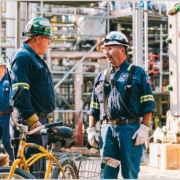
Across terminals and through assets like trucks, rail, pipelines, barges and marine vessels, the focus stays the same: move product safely, on time and on spec. The equipment is only part of the equation. 

Behind the equipment is a whole operation of people managing the details — planning routes, making adjustments, coordinating across teams and making sure each step lines up with the next. It’s not always easy, but it’s what keeps things moving when conditions aren’t ideal. 

That structure creates options. When conditions change, you need them. 

More Than One Way to Deliver 

The same idea applies outside of logistics. 

Some businesses have a core focus, and that matters. But relying on a single path or way of operating can create risk. Diversification gives you more than one way to meet customer needs when conditions change. Diversification can come from various modes of transportation services, but it can also come from scale. Scale can allow you to pull resources from numerous locations on short notice in emergency situations. This became critical for our Ergon team in March as the Iran conflict caused panic buying and constrained rail availability. We were able to pull from our diverse locations to meet the needs of our customers in the regions most impacted by this market volatility.   

It was good to have those options, but having options isn’t enough on its own. 

Managing them well is what makes the difference. Clarity, coordination and accountability determine whether a network actually performs the way it should. Without that, added capability can turn into unnecessary complexity. 

When it’s working, customers don’t see the moving parts. What they see is consistency. They know what to expect, even when conditions aren’t steady. 

In those environments, consistency matters. 

What Holds 

Flexibility isn’t something you create in the moment. It’s built strategically ahead of time — in how systems are designed, how teams operate and how decisions are made. 

It’s also about the people like drivers, operators, dispatchers, planners and others who keep things moving every day. 

Their work is often behind the scenes, but the impact isn’t. 

If you have the opportunity, take a moment to thank someone in logistics. There’s a good chance their work played a role in something you relied on today. 

Stepping In During a Time of Need

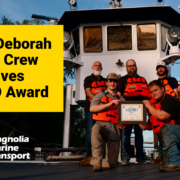
Our commitment to safety at Ergon extends beyond our own people. The crew of Magnolia Marine Transport Company’s (MMT) M/V Deborah Miles was awarded the American Waterways Operators’ HERO Award for their actions in response to a distress call on the upper Mississippi River. When a sailor lost control of his boat in heavy fog, quick decision making by the crew on the M/V Deborah Miles brought the sailor and vessel safely to dock.   

Scott Box, Captain of the M/V Deborah Miles, recalled that a call came through the dispatch while he was training Layton Martin, a Steersman for MMT. “There was fog on the water about 10 feet high, and we were northbound on the Mississippi. We heard a *pan-pan broadcast on Channel 16 [Coast Guard],” Captain Scott said.  

Because MMT’s vessel was near the reported location, Captain Scott and Layton quickly reacted. Layton immediately reduced the speed of the M/V Deborah Miles, and Captain Scott started coordination and communication with nearly 25 other towboats along the river to locate the distressed sailboat on radar. The boat, traveling from Minnesota into Mississippi, had already narrowly missed colliding with another towboat by only a few feet. Vessels nearby notified Captain Scott that the sailboat was drifting in their direction.  

“Not wanting to put my Steersman in a situation he’s never been in, I took over the helm,” Captain Scott said.  

Racing Against a Ticking Clock 

With little time to spare, the MMT crew developed two response plans.  

“Plan A was for me to go to the second deck to drop our *skiff so we could stop the sailboat from being at the mercy of the current,” Layton said.  

Before they could execute that plan, Captain Scott thought of a quicker, more efficient alternative — Plan B.   

“Our vessel was making way to the left side of our port side,” he explained. “I told the sailboat over Channel 16 that I was going to push my barges onto the Cora Island and stick my stern out to prevent his boat from drifting. I asked if he had a good line and he told me he did.”  

When the M/V Deborah Miles reached the island, the crew gained a clearer visual of the sailboat breaking through the fog. Captain Scott communicated over the radio that he would swing the stern out and bring it back in. This maneuver would create tension on the sailboat line, allowing the MMT crew to secure it safely against their vessel despite the strong current.  

“He threw the line to my crew, and they tied his sailboat off. I eased the stern in to make contact so it wouldn’t drift,” Captain Scott said. “When my guys checked on him, he was safe and uninjured.”  

However, the situation wasn’t fully resolved. The sailboat remained in danger because of how the current was pushing against the stern. Captain Scott instructed Layton to retake the helm and turn the tow so the sailboat’s bow faced the current for safest navigation.  

“So, I called the fleet boat working in the area,” Layton said. “He came down the lightboat, tied the sailboat to his vessel and brought him back up to dock at Cora Island.”  

A Hero’s Reward  

The MMT crew was awarded the American Waterways Operators’ HERO Award.   

“This was amazing that we all worked together,” Captain Scott said cheerfully. “I’m super proud of these guys for acting without hesitation during an all-hands-on-deck event.”  

Layton shared that sentiment: “We do weekly drills and safety meetings on different scenarios, which has prepared our crews to perform in situations like this, and that recognition belongs to MMT for placing safety before profits.”  

We also acknowledge and appreciate the support of the MMT office — Mike Carpenter, Kris Towers and Charles Thornton — for their alertness and coordination during this event. Thank you, team.  


*A pan-pan is an international radio emergency signal in aviation and maritime communications to indicate a situation of urgency for boats, ships, aircrafts and other vessels.  

*A skiff is a small, flat-bottomed boat with a sharp bow and square stern.   

Revised Page Fields

a:13:{s:8:”location”;a:3:{i:0;a:1:{i:0;a:3:{s:5:”param”;s:9:”post_type”;s:8:”operator”;s:2:”==”;s:5:”value”;s:12:”landing-page”;}}i:1;a:1:{i:0;a:3:{s:5:”param”;s:9:”post_type”;s:8:”operator”;s:2:”==”;s:5:”value”;s:4:”page”;}}i:2;a:1:{i:0;a:3:{s:5:”param”;s:9:”post_type”;s:8:”operator”;s:2:”==”;s:5:”value”;s:10:”case-study”;}}}s:8:”position”;s:15:”acf_after_title”;s:5:”style”;s:7:”default”;s:15:”label_placement”;s:3:”top”;s:21:”instruction_placement”;s:5:”label”;s:14:”hide_on_screen”;a:7:{i:0;s:7:”excerpt”;i:1;s:10:”discussion”;i:2;s:8:”comments”;i:3;s:9:”revisions”;i:4;s:10:”categories”;i:5;s:4:”tags”;i:6;s:15:”send-trackbacks”;}s:11:”description”;s:0:””;s:12:”show_in_rest”;i:1;s:13:”display_title”;s:0:””;s:15:”show_in_graphql”;i:1;s:18:”graphql_field_name”;s:17:”pageFieldsRevised”;s:37:”map_graphql_types_from_location_rules”;i:1;s:13:”graphql_types”;a:1:{i:0;s:4:”Page”;}}

Resource Links

a:12:{s:8:”location”;a:1:{i:0;a:1:{i:0;a:3:{s:5:”param”;s:9:”post_type”;s:8:”operator”;s:2:”==”;s:5:”value”;s:13:”resource-link”;}}}s:8:”position”;s:6:”normal”;s:5:”style”;s:7:”default”;s:15:”label_placement”;s:3:”top”;s:21:”instruction_placement”;s:5:”label”;s:14:”hide_on_screen”;s:0:””;s:11:”description”;s:0:””;s:12:”show_in_rest”;i:0;s:15:”show_in_graphql”;i:1;s:18:”graphql_field_name”;s:13:”resourceLinks”;s:37:”map_graphql_types_from_location_rules”;i:0;s:13:”graphql_types”;s:0:””;}

Video Banner

a:12:{s:8:”location”;a:2:{i:0;a:1:{i:0;a:3:{s:5:”param”;s:4:”page”;s:8:”operator”;s:2:”==”;s:5:”value”;s:1:”6″;}}i:1;a:1:{i:0;a:3:{s:5:”param”;s:4:”page”;s:8:”operator”;s:2:”==”;s:5:”value”;s:2:”16″;}}}s:8:”position”;s:15:”acf_after_title”;s:5:”style”;s:7:”default”;s:15:”label_placement”;s:3:”top”;s:21:”instruction_placement”;s:5:”label”;s:14:”hide_on_screen”;s:0:””;s:11:”description”;s:0:””;s:12:”show_in_rest”;i:0;s:15:”show_in_graphql”;i:1;s:18:”graphql_field_name”;s:10:”homeBanner”;s:37:”map_graphql_types_from_location_rules”;i:0;s:13:”graphql_types”;s:0:””;}

Contact Info

a:12:{s:8:”location”;a:1:{i:0;a:1:{i:0;a:3:{s:5:”param”;s:9:”post_type”;s:8:”operator”;s:2:”==”;s:5:”value”;s:7:”contact”;}}}s:8:”position”;s:15:”acf_after_title”;s:5:”style”;s:7:”default”;s:15:”label_placement”;s:3:”top”;s:21:”instruction_placement”;s:5:”label”;s:14:”hide_on_screen”;a:4:{i:0;s:11:”the_content”;i:1;s:7:”excerpt”;i:2;s:10:”discussion”;i:3;s:8:”comments”;}s:11:”description”;s:0:””;s:12:”show_in_rest”;i:0;s:15:”show_in_graphql”;i:1;s:18:”graphql_field_name”;s:11:”contactInfo”;s:37:”map_graphql_types_from_location_rules”;i:1;s:13:”graphql_types”;s:0:””;}

CPT: Location

a:15:{s:8:”location”;a:1:{i:0;a:1:{i:0;a:3:{s:5:”param”;s:9:”post_type”;s:8:”operator”;s:2:”==”;s:5:”value”;s:8:”location”;}}}s:8:”position”;s:15:”acf_after_title”;s:5:”style”;s:7:”default”;s:15:”label_placement”;s:3:”top”;s:21:”instruction_placement”;s:5:”label”;s:14:”hide_on_screen”;s:0:””;s:11:”description”;s:0:””;s:12:”show_in_rest”;i:0;s:13:”display_title”;s:0:””;s:15:”allow_ai_access”;i:0;s:14:”ai_description”;s:0:””;s:15:”show_in_graphql”;i:1;s:18:”graphql_field_name”;s:12:”cpt:Location”;s:37:”map_graphql_types_from_location_rules”;i:1;s:13:”graphql_types”;a:2:{i:0;s:4:”Page”;i:1;s:4:”Post”;}}

Page Fields

a:13:{s:8:”location”;a:1:{i:0;a:1:{i:0;a:3:{s:5:”param”;s:11:”page_parent”;s:8:”operator”;s:2:”==”;s:5:”value”;s:4:”7184″;}}}s:8:”position”;s:15:”acf_after_title”;s:5:”style”;s:7:”default”;s:15:”label_placement”;s:3:”top”;s:21:”instruction_placement”;s:5:”label”;s:14:”hide_on_screen”;a:7:{i:0;s:7:”excerpt”;i:1;s:10:”discussion”;i:2;s:8:”comments”;i:3;s:9:”revisions”;i:4;s:10:”categories”;i:5;s:4:”tags”;i:6;s:15:”send-trackbacks”;}s:11:”description”;s:0:””;s:12:”show_in_rest”;i:1;s:13:”display_title”;s:0:””;s:15:”show_in_graphql”;i:1;s:18:”graphql_field_name”;s:10:”pageFields”;s:37:”map_graphql_types_from_location_rules”;i:1;s:13:”graphql_types”;a:1:{i:0;s:4:”Page”;}}

Site Admin Fields

a:12:{s:8:”location”;a:1:{i:0;a:1:{i:0;a:3:{s:5:”param”;s:9:”post_type”;s:8:”operator”;s:2:”==”;s:5:”value”;s:4:”site”;}}}s:8:”position”;s:15:”acf_after_title”;s:5:”style”;s:7:”default”;s:15:”label_placement”;s:3:”top”;s:21:”instruction_placement”;s:5:”label”;s:14:”hide_on_screen”;s:0:””;s:11:”description”;s:0:””;s:12:”show_in_rest”;i:0;s:15:”show_in_graphql”;i:1;s:18:”graphql_field_name”;s:15:”siteAdminFields”;s:37:”map_graphql_types_from_location_rules”;i:0;s:13:”graphql_types”;s:0:””;}