Run It Like You Own It

After nearly 50 years at Ergon’s Knoxville terminal, Charlie Lynch reflects on the people, passion and responsibilities that defined his career. 


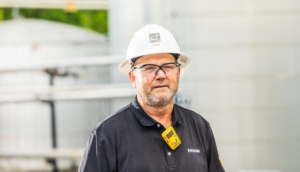
For five decades, Charles ‘Charlie’ Lynch has walked Ergon’s Knoxville terminal like someone tending to a home. 

He notices everything: a piece of paper near the loading rack. A handrail that needs a fresh coat of yellow paint. A strange sound coming from a pump in the middle of the night.  

Even after decades at the terminal — and years spent managing it — no job is too small for Lynch. 

“I’m not going to ask my guys to do something that I wouldn’t do or couldn’t do,” Lynch said. “If they’re busy and I need trucks loaded, I’m loading trucks.” 

That mindset has shaped both Lynch’s career and the culture of the Knoxville terminal itself — a small but busy terminal tucked along the Tennessee River that has consistently evolved alongside the industry. 

________________

________________

Doing Whatever Needs Doing 

When Lynch first arrived at the Knoxville terminal in 1977, the operation looked much different than it does today. At the time, the facility was owned by the Krug family, who had started the company in 1954 — the same year Leslie Lampton Sr. founded Ergon. 

Lynch began as a terminal operator, loading trucks, filling tanks and helping maintain equipment during long weeks that often stretched into weekends. 

“You did everything,” Lynch said. “Whatever had to be done, we did.” 

Over the years, he learned every corner of the operation, from electrical work to heat tracing, general maintenance, loading operations and quality control. Eventually, he worked his way up from operator to assistant manager. In June 2007, Lynch took on the role of Terminal Manager — which he’s held ever since. 

His hands-on experience became one of the Knoxville terminal’s defining strengths. 

“If they call me in the middle of the night and tell me something’s wrong at panel seven or on a tank, I know exactly what they’re talking about,” Lynch said. “Experience is the world’s greatest teacher.” 

Today, the Knoxville terminal sits on roughly 16 acres and stores asphalt products delivered primarily by barge before being loaded onto trucks and shipped throughout the region. The facility includes 15 tanks with approximately 200,000 barrels of storage capacity. But ask Lynch what matters most about the operation, and his answer has little to do with numbers. 

“Obviously, we want to do right by our customers and their products,” said Lynch. “But our number one priority is safety. And if we’re staying safe, that naturally means we’re doing a good job for those customers.” 

Raising the Safety Standard 

Safety has long been a priority at the terminal, and that focus was further strengthened after Ergon acquired the facility in 2007.  

Lynch admits the transition initially brought uncertainty. Like many employees who have experienced acquisitions in the industry, he wondered what changes might come. But he trusted the judgment of former owner Jim Krug, who believed Ergon was the right fit. 

“When Mr. Lampton talked to him, that was it. Mr. Krug knew who to sell it to,” Lynch said. “And he sold it to the right person.” 

What followed was a transformation in training, safety systems and operational support that left a lasting impression on Lynch. 

“I was really impressed by Ergon’s commitment to safety and training,” said Lynch. “They brought in people from across the organization — I’d never seen such a comprehensive safety training program. I was all for it, because at the end of the day, we want everybody to go home like they came to work.” 

Over time, that philosophy became deeply embedded in the terminal’s culture. Lynch speaks about safety less as a requirement and more as a responsibility — something built through repetition, mentorship and ownership. 

“Safety is a way of life,” he said. “It’s not something you just think about. You have to live it.” 

Pride in the Details 

That same sense of ownership shows up everywhere around the Knoxville terminal. 

The facility is known for its clean appearance, bright yellow handrails and meticulous housekeeping — details Lynch insists matter just as much as production numbers.  

To Lynch, housekeeping is about more than appearance. A clean terminal signals discipline, professionalism and respect for the people who work there and visit the site every day. 

“We take a lot of pride in maintaining our facility,” said Lynch. “We do our best to keep it spotless. Doesn’t matter how old our terminal is or what we’re storing, I want it looking nice, and I want it to stay that way.” 

Relationships Matter 

The Knoxville terminal also maintains close relationships with local firefighters, police officers and emergency response teams. Lynch regularly invites them onsite for tours and training exercises so they understand the facility long before an emergency could ever happen. 

“We want them to know what they’re coming into,” said Lynch. “We prioritize safety, but if something were to happen, we want to make sure there’s no confusion on site.” 

Equally as important to Lynch are the relationships built with the truck drivers and customers who pass through the terminal each day. 

“Every truck driver that comes through that gate is my boss,” said Lynch. “If they don’t show up, I don’t have a job. It’s as simple as that.” 

Lynch knows many of them by name. He asks about their families and helps them when their trucks break down. To him, customer service is not separate from the work — it is the work. 

“Treat people good and they’ll come back,” said Lynch. “You show them you appreciate them, thank them for doing their job and be there to help them when they need help. It makes your life easier, and it’s just the right thing to do.” 

More Than a Workplace 

One of Lynch’s clearest memories from the transition to Ergon came shortly after the acquisition, when Mr. Lampton visited Knoxville and took employees and their spouses out to dinner. 

“Mr. Lampton really impressed me when he came up here and took all of us to the nicest restaurant in Knoxville,” said Lynch. “We had a great meal, and before he spoke, he went around to every table, introduced himself and spent time talking with all of us and our wives. He wanted everyone to feel included and informed, and that went a long way so early in the acquisition.” 

To Lynch, moments like that reinforced something he had already begun to believe — that despite the changes happening around the terminal, the company still valued relationships and people. 

“It just got better,” Lynch said of the transition. “It empowered us, and we felt more responsible to take ownership.” 

That mentality became one of the defining principles of Lynch’s career. 

“They told me to run it like I own it,” said Lynch. “And that’s what I’ve always tried to do.” 

Charlie’s Next Chapter 

After nearly five decades at the Knoxville terminal, Lynch now looks toward retirement with the same hands-on mindset that defined his career. When asked about his plans, Lynch already had everything figured out. 

“I’m really looking forward to spending time with my wife, first and foremost. Being home more often is going to be a blessing. And, I’ll enjoy playing with my street rods,” he said. “I buy and refurbish older models in a shop I built myself. That’ll be fun, and I’m excited to have the time to teach my grandkids about cars.” 

As Lynch prepares for retirement, he reflects on his time at the Knoxville terminal with gratitude.  

“I thank God for it,” said Lynch. “It gave me a good job to raise my kids and grandkids. And Mr. Lampton always treated me like I was somebody — not just a number.” 

The terminal changed over the years. The industry has changed, too. However, the mindset Charlie Lynch brought to the job never did: Take care of your people, take pride in the work and leave things better than you found them.  

The Advantage of Flexibility in Logistics

Read Executive Vice President – Integrated Services & Logistics Joel Pastorek‘s latest LinkedIn article, as shown below, sharing why flexibility is so important in the logistics industry.

________________

It’s easy to overlook logistics when everything is working the way that it should. 

Most people don’t realize how much of daily life depends on it. Goods don’t simply show up where they’re needed. They are moved, stored, coordinated and delivered by people doing work that is often out of sight, but always required. 

But when it’s not working, you notice it quickly. Businesses, communities, families and individuals feel it when something they rely on doesn’t show up when it should.  

Efficiency has always been the focus in logistics, and for good reason. But at some point, efficiency alone isn’t enough. Systems have to be able to adjust when conditions change. That’s where flexibility starts to matter, and where it has to work alongside efficiency. 

And when it comes to customers, their needs shift. Markets move. Disruptions happen, sometimes without much warning. When they do, the questions become straightforward: Can your business still deliver, and can your customers count on you? 

Not in Theory — In Practice 

Flexibility shows up in how the work is built. 

Some companies don’t focus on flexibility until something breaks. A supplier changes, a route is disrupted or demand shifts faster than expected. At that point, flexibility isn’t a strategy, it determines whether you are viable and have another way forward. 

For logistics providers, that often comes down to how diversified and connected the network really is — not on paper, but in practice. 

For Ergon, that shows up in how our companies operate together. Storage, transportation and coordination aren’t separate efforts. They are tied to each other. 

Across terminals and through assets like trucks, rail, pipelines, barges and marine vessels, the focus stays the same: move product safely, on time and on spec. The equipment is only part of the equation. 

Behind the equipment is a whole operation of people managing the details — planning routes, making adjustments, coordinating across teams and making sure each step lines up with the next. It’s not always easy, but it’s what keeps things moving when conditions aren’t ideal. 

That structure creates options. When conditions change, you need them. 

More Than One Way to Deliver 

The same idea applies outside of logistics. 

Some businesses have a core focus, and that matters. But relying on a single path or way of operating can create risk. Diversification gives you more than one way to meet customer needs when conditions change. Diversification can come from various modes of transportation services, but it can also come from scale. Scale can allow you to pull resources from numerous locations on short notice in emergency situations. This became critical for our Ergon team in March as the Iran conflict caused panic buying and constrained rail availability. We were able to pull from our diverse locations to meet the needs of our customers in the regions most impacted by this market volatility.   

It was good to have those options, but having options isn’t enough on its own. 

Managing them well is what makes the difference. Clarity, coordination and accountability determine whether a network actually performs the way it should. Without that, added capability can turn into unnecessary complexity. 

When it’s working, customers don’t see the moving parts. What they see is consistency. They know what to expect, even when conditions aren’t steady. 

In those environments, consistency matters. 

What Holds 

Flexibility isn’t something you create in the moment. It’s built strategically ahead of time — in how systems are designed, how teams operate and how decisions are made. 

It’s also about the people like drivers, operators, dispatchers, planners and others who keep things moving every day. 

Their work is often behind the scenes, but the impact isn’t. 

If you have the opportunity, take a moment to thank someone in logistics. There’s a good chance their work played a role in something you relied on today. 

Stepping In During a Time of Need

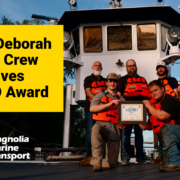
Our commitment to safety at Ergon extends beyond our own people. The crew of Magnolia Marine Transport Company’s (MMT) M/V Deborah Miles was awarded the American Waterways Operators’ HERO Award for their actions in response to a distress call on the upper Mississippi River. When a sailor lost control of his boat in heavy fog, quick decision making by the crew on the M/V Deborah Miles brought the sailor and vessel safely to dock.   

Scott Box, Captain of the M/V Deborah Miles, recalled that a call came through the dispatch while he was training Layton Martin, a Steersman for MMT. “There was fog on the water about 10 feet high, and we were northbound on the Mississippi. We heard a *pan-pan broadcast on Channel 16 [Coast Guard],” Captain Scott said.  

Because MMT’s vessel was near the reported location, Captain Scott and Layton quickly reacted. Layton immediately reduced the speed of the M/V Deborah Miles, and Captain Scott started coordination and communication with nearly 25 other towboats along the river to locate the distressed sailboat on radar. The boat, traveling from Minnesota into Mississippi, had already narrowly missed colliding with another towboat by only a few feet. Vessels nearby notified Captain Scott that the sailboat was drifting in their direction.  

“Not wanting to put my Steersman in a situation he’s never been in, I took over the helm,” Captain Scott said.  

Racing Against a Ticking Clock 

With little time to spare, the MMT crew developed two response plans.  

“Plan A was for me to go to the second deck to drop our *skiff so we could stop the sailboat from being at the mercy of the current,” Layton said.  

Before they could execute that plan, Captain Scott thought of a quicker, more efficient alternative — Plan B.   

“Our vessel was making way to the left side of our port side,” he explained. “I told the sailboat over Channel 16 that I was going to push my barges onto the Cora Island and stick my stern out to prevent his boat from drifting. I asked if he had a good line and he told me he did.”  

When the M/V Deborah Miles reached the island, the crew gained a clearer visual of the sailboat breaking through the fog. Captain Scott communicated over the radio that he would swing the stern out and bring it back in. This maneuver would create tension on the sailboat line, allowing the MMT crew to secure it safely against their vessel despite the strong current.  

“He threw the line to my crew, and they tied his sailboat off. I eased the stern in to make contact so it wouldn’t drift,” Captain Scott said. “When my guys checked on him, he was safe and uninjured.”  

However, the situation wasn’t fully resolved. The sailboat remained in danger because of how the current was pushing against the stern. Captain Scott instructed Layton to retake the helm and turn the tow so the sailboat’s bow faced the current for safest navigation.  

“So, I called the fleet boat working in the area,” Layton said. “He came down the lightboat, tied the sailboat to his vessel and brought him back up to dock at Cora Island.”  

A Hero’s Reward  

The MMT crew was awarded the American Waterways Operators’ HERO Award.   

“This was amazing that we all worked together,” Captain Scott said cheerfully. “I’m super proud of these guys for acting without hesitation during an all-hands-on-deck event.”  

Layton shared that sentiment: “We do weekly drills and safety meetings on different scenarios, which has prepared our crews to perform in situations like this, and that recognition belongs to MMT for placing safety before profits.”  

We also acknowledge and appreciate the support of the MMT office — Mike Carpenter, Kris Towers and Charles Thornton — for their alertness and coordination during this event. Thank you, team.  


*A pan-pan is an international radio emergency signal in aviation and maritime communications to indicate a situation of urgency for boats, ships, aircrafts and other vessels.  

*A skiff is a small, flat-bottomed boat with a sharp bow and square stern.   

Meet Ergon’s First Female Marine Pilot – Beverly Ahner

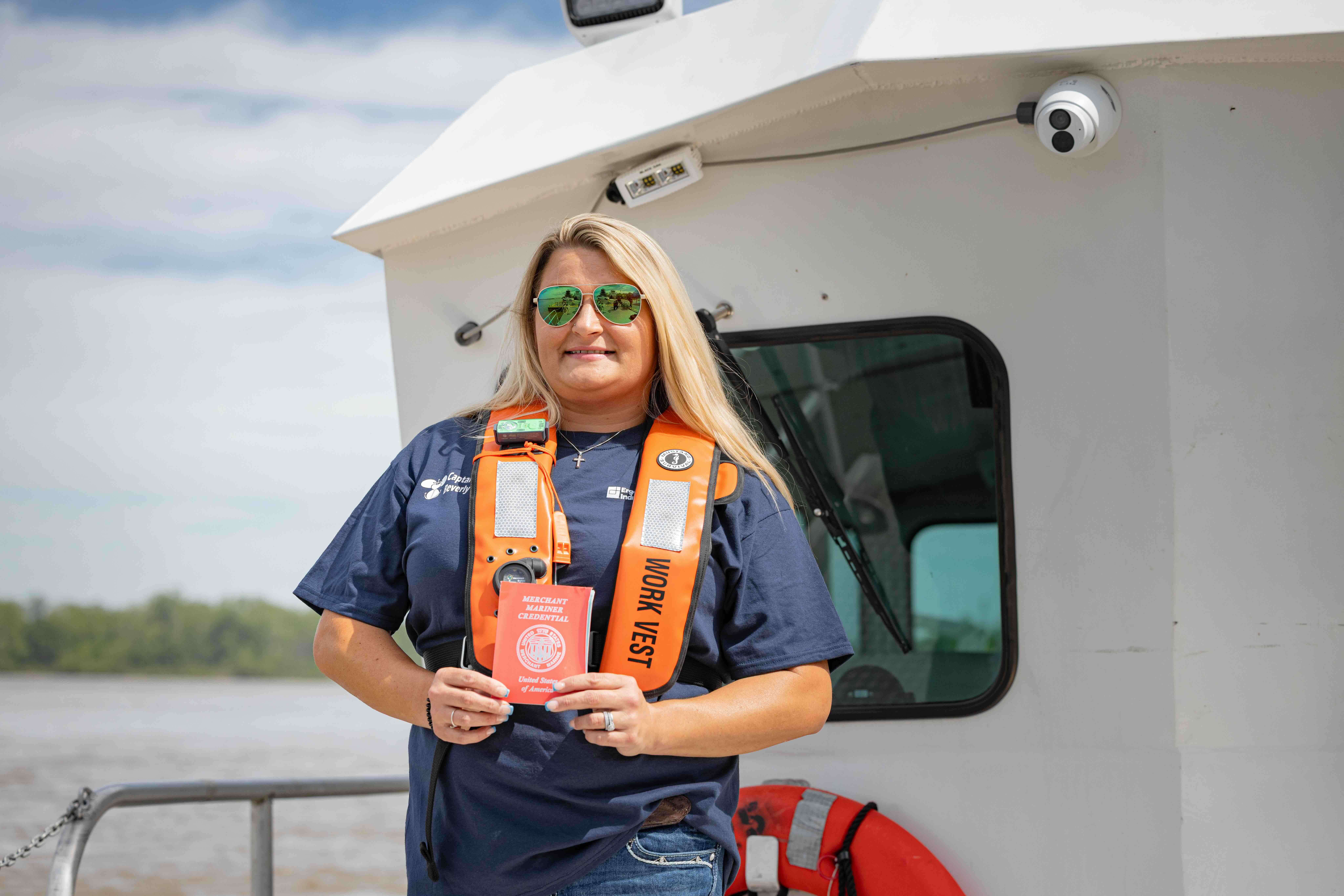
From grocery hand to the helm of the boat, Beverly Ahner’s journey as part of Ergon Marine & Industrial Supply Inc. (EMIS) is a story of hard work, determination and the opportunities that can arise when someone is willing to step up and take on new challenges. Since joining Ergon in June 2022, Ahner has shown an incredible ability to grow and learn, making her a source of inspiration for her coworkers and community.

Ahner began her maritime career in an entry-level position at the EMIS grocery store in Vicksburg, Mississippi. She spent her days pulling orders, stocking shelves and filling pallets. Her willingness to learn and contribute led her to apply for a role in the dispatch office, where her dedication and adaptability stood out to her supervisors. “She was really quick with the training, took off with it — real fast learner with a really hard work ethic,” said Chris Maxwell, Vice President of Marine Operations.

While working in dispatch, she interacted with EMIS pilots regularly and became fascinated with their work, so much so that she expressed interest to her manager, who guided her on a new career path. “I never dreamed I would be doing something like this,” said Ahner, who spent time, even on her off days, learning the towboat business. When the opportunity to work as a deckhand on a crew boat came up, Ahner eagerly applied and quickly adapted to the role, gaining hands-on experience and eventually learning how to operate the boat. Even as she took on new responsibilities, Ahner continued to support her team in dispatch, demonstrating her commitment to collaboration and teamwork.

Her hard work eventually led to her earning a 100-ton master license, allowing her to pilot vessels weighing a minimum of 100 tons. The license required one year of service on the water, a 10-day training program covering navigation, mechanics and safety, and passing multiple challenging exams. Passing all the tests on the first attempt — a rare accomplishment — was a testament to Ahner’s perseverance and focus.

____________________

____________________
Now, she’s earned the distinction of becoming Ergon’s first female marine pilot. She captains the M/V Big Valley, the boat where she learned the trade. “She’s earned this, and her coworkers are all big, big fans of her success,” Maxwell said. Not only is Ahner’s Ergon family proud, but her family is as well. “Many of my family members are in this business,” said Ahner. “They supported me every step of the way when I told them this was something I wanted to pursue.” Ahner also noted the feeling of accomplishment that’s validated by her children who sing her praises while in school: “My kids go to school and tell all their teachers, ‘My mama’s the first female pilot.’ Just to see them so happy about it is truly amazing.”

By celebrating Ahner’s achievement, Ergon hopes to highlight the many opportunities available in the marine industry and inspire others in the community to consider careers on the river. “We hope her story shows that the river is for everyone and that there are plenty of opportunities for people to create a career out here,” Maxwell said.

Ahner’s story is one of persistence and growth, supported by a workplace that values hard work and determination. “She’s a really good example of what Mr. Lampton would’ve called an Ergonaut,” Maxwell added. “She’s still young in her tenure, but she’s well on her way. She’s a success story that we’re all proud to see.”

Ergon is grateful to play a part in Ahner’s journey, and we look forward to seeing her continued success in the years ahead.

Magnolia Marine Transport Company Expands Fleet of Towboats and Barges

FOR IMMEDIATE RELEASE

Magnolia Marine Transport Company Expands Fleet of Towboats and Barges

March 10, 2026

Vicksburg, Miss. — Magnolia Marine Transport Company (MMT) has expanded our fleet with the addition of three towboats and nine barges.

Established in 1968, MMT operates one of the largest heated petroleum transportation fleets in the United States. This fleet expansion increases our capacity to meet customer needs on the waterways.

“The addition of assets to our fleet speaks to our commitment and strengthens our ability to serve our customers at the highest level,” said Jacob Dykes, President of MMT.

MMT’s new vessels will create additional jobs, as crews are established to staff the fleet’s new assets. MMT supports the Purposeful Growth of employees and offers a rewarding career path from green deckhand to captain, as well as competitive benefits.

“By investing in the ongoing growth of our fleet, we can continue to provide the level of dependable and flexible service our customers expect from us,” said Dykes. “Every new vessel and crew member plays a part in that.”

As a member of the Ergon family of companies, MMT is committed to Ergon’s mission of meeting needs, supporting families and serving customers.

About Ergon
Founded in 1954, Ergon is a group of privately held companies that operate under three primary business segments: Energy & Specialty Solutions, Pavement & Coating Resources, and Integrated Services & Logistics, of which MMT is a part.

Contact Information
Kathy Potts
Vice President – Marketing Communications
601-933-3000
Kathy.Potts@ergon.com
ergon.com

The People and Tech Behind Pipeline Safety

Go behind the scenes of a 38-mile smart pig run and see how teamwork and precision protect pipeline integrity and the communities we serve.

________________

A 38-Mile Mission Begins Before Dawn
It’s a dark, chilly October morning at Ergon Terminaling Inc. in Magnolia, Ohio. An above-ground oil storage tank farm with a direct pipeline connection to the Ergon – West Virginia Inc. (EWV) refinery, the Magnolia terminal is a lynchpin of Ergon’s operations in the area.

With headlamps and a pair of taillights illuminating the worksite, the team is up early to launch a “smart pig” through 38 miles of pipeline running between Magnolia, Ohio, and Newell, West Virginia.

Despite the squealing sound that accompanies the initial launch, this isn’t the kind of pig found on the farmlands surrounding the terminal. It’s a sophisticated device used to inspect pipelines for corrosion, cracks, dents, leaks and any other safety risks.

Just as the first hint of sunrise breaks over the horizon and the project is about to launch, our Magnolia team members and representatives from a local contractor work together to finish their final safety checks. Hundreds of hours of preparation have led to this point, and it’s vital to ensure the ensuing steps — from loading the device onto a truck to positioning it for insertion into the pipeline — are carried out by the book.

With everyone in the field helping however they can regardless of their job title, the smart pig is quite literally in good hands.

Three Little Pigs, One Big Goal
The first step of this critically important inspection is carried out by a scraper pig. As the scraper pig makes its way through the pipeline, it removes debris and rust flakes through a combination of flexible cups, discs, steel-wire brushes and spring-loaded scraper blades.

Next comes the gauge pig with a simple but crucial role: ensuring there are no obstructions along the pipeline that could damage the much more expensive smart pig. Sized to fit snuggly in an eight-inch pipeline, these two tools pave the way for the rest of the project.

Once the pipeline has been confirmed to be clear, the smart pig can be launched. Widely used across the oil industry, a smart pig is a unique device several feet in length that checks for anomalies, reports on the status of previous repairs and maps out the need for future maintenance — all without ever needing the pipeline to be shut down.

“It’s how you determine your mechanical integrity,” says Sam Davis, Director of Projects for Ergon Terminaling. “It takes readings, it finds things like dents and corrosion, even past repairs. Starting at the Magnolia location, it takes 13 hours. We push it with oil, and there are teams that’ll follow it so they can make time-stamped recordings of where it is.”

It takes more than just the team at Magnolia. With 15,000 barrels of oil needed to send the smart pig along, constant communication is essential to ensure everyone involved knows where they fit in the partnership.

“It’s a very involved process,” says Davis. “There’s a lot of planning and coordinating. We typically start about six to eight months out to get ready for it. We’re required to do these projects, and it takes a good bit of planning each time to make it happen smoothly and safely.”

Long before the smart pig comes off the truck, meetings are held with EWV, Ergon Oil Purchasing Inc. (EOP), Ergon’s Engineering Team and the external contractor to coordinate the personnel, equipment and oil movements needed to make the run happen.

“Our team in Magnolia will assist with the launch itself, and then you’ll have the movement coordinator at Newell making sure the refinery is prepped to receive the pig,” says Davis. “Ergon Terminaling, EOP and EWV must make sure we have enough oil at Magnolia to send the pig, and that EWV has enough room in a tank to receive the oil. That’s the part that takes the most coordination, because the pig run has to be done in one shot — it can’t be stopped once started. But our people have shown, time and time again, that they’re equipped to handle it.”

Once the pig is launched, the external contractor follows it on its 13-hour journey from Magnolia to Newell. Whenever the smart pig passes road crossings and other predetermined locations, their team intercepts it with a pinging device that allows them to see if it’s moving and functioning properly.

“Essentially, this is a highly technical, extremely organized 13-hour game of leapfrog,” says Davis.

Keeping Neighbors and Nature Safe
Smart pig readings are federally regulated. Teams are required to complete a project every five years to ensure their pipelines aren’t at risk of causing an environmental safety issue. For the experts at Ergon Terminaling, though, this project is about more than just checking a box.

The Magnolia team is all about running a successful project. But for them, success means more than just a smooth inspection. It’s about ensuring each other’s safety and the safety of those around them, all while embodying Ergon’s mission of meeting needs, supporting families and serving customers.

“We’re the link between EOP, Ergon Trucking and EWV,” explains Justyn Mook, Crew Chief at the Magnolia terminal. “Operating in a safe manner and taking proper care of our equipment is an essential part of serving the needs of those companies. Good mechanical integrity reduces downtime that can be caused by poorly maintained equipment and keeps us all safe. These smart pig runs play a huge role in preserving the quality we pride ourselves on.”

“Our teams are always looking for ways to be more than just ‘good enough’,” says Zach Young, President of Ergon Terminaling. “And you see that at all levels with projects like a smart pig run. Technicians, crew chiefs, regional managers — everyone is out there going beyond their job description, because everyone knows how important something like this is. Our team at Magnolia is a great example of what it means to be ‘United by Service’ and ‘Driven by Solutions’.”

Craig Rohr, Northern Regional Manager of Ergon Terminaling, shines a light on a benefit that might not be as obvious when discussing highly regulated technical maintenance.

“Of course we want the pipeline to run efficiently because that’s what our business relies on,” says Rohr. “But also, a lot of us are very outdoorsy. We enjoy going fishing, hunting and hiking, just like many people in this community. So, we want to do right by people and the environment and be good stewards of the places we love to spend time in.”

As the workday comes to an end 13 hours later, the team at Magnolia is informed that EWV has safely received the smart pig. Following a successful run, Senior Engineer Robert Cooper and Lead Plant Support Engineer Kendall Brown guide the Engineering Team through several rounds of meticulous reviews of the data captured by the device.

“Once we get the report back from the vendor, we review it and look for any kind of anomaly,” says Cooper. “We’re looking for any defects in the pipe that meets the criteria outlined by the Pipeline and Hazardous Materials Safety Administration [PHMSA] in the CFR 195 document. Once we identify any anomalies, we review the data and help build the plan to execute the repairs.”

Meetings with the Operations Team are then scheduled to go over the scope of repairs needed and how the work will fit into the budget. “We’ll review and confirm with Operations that this is the repair we need to do, and we’ll discuss our options on doing it in-house or with external contractors,” says Brown. “After we all agree on the next steps, our Engineering Team manages the project. We make sure all the repairs are done and we document them. Because every year, there’s an annual report due to PHMSA that shows how many repairs we did, how many miles we inspect, all that kind of data.”

Though it’s a complicated process, the camaraderie between the teams ensures the project operates like a well-oiled machine.

“Working with Operations and Terminaling and getting everything put together, it’s as near effortless of a process as it could be, really,” says Brown. “We all communicate and work really well together.”

From launch to recovery, every step of a smart pig run is a testament to the value of preparation, precision and the teams’ commitment to ensuring the highest standards of safety. These inspections preserve more than just the bottom line — they’re about protecting people and the forests, parks, rivers and lakes our communities call home.

25 Years of Partnership: Ergon Trucking and Southern Ionics

“Once They Tell You They’re Going To Do It, You Can Forget About It.”
Founded in the 1980s in Mobile, Alabama, Southern Ionics is a leading producer and supplier of aluminum, sulfur, ammonia and zirconium products. These products are used in a broad range of applications, including the production of safe drinking water, the removal of pollutants from the air and as a catalyst for clean fuels.

Delivering tens of thousands of loads annually, Southern Ionics handles over 90% of these deliveries in-house.

But where do they turn when it’s time to bring in outside help?

Who can Southern Ionics count on to provide the same level of service their customers have come to expect?

The answer is Ergon Trucking (Ergon). The partnership between Ergon and Southern Ionics began in the late ‘90s. What started as an initial trial run paved the way for decades of collaboration that the Southern Ionics team knows they can always rely on.

“From the dispatchers to the drivers to the office,” said Sam White, Transportation Manager at Southern Ionics. “The relationship that we’ve built over the past 25+ years has proven to be a true partnership. Everybody you talk to is professional, and if they tell you they’re going to do it, you can take it to the bank. They’re going to take care of it. It’ll be done as well as you would have done it with your own equipment and trucks.”

For both companies, the connection runs deeper than logistics. In many cases, frontline workers like truck drivers may be the only interaction customers have with a company. Ergon’s Founder, Leslie Lampton Sr., often said that truck drivers are the face of the business.

The Southern Ionics team shares that belief — and it’s one of the reasons the partnership continues to thrive.

“We take a lot of pride in the people we hire,” said White. “And I think it’s obvious Ergon does the same thing.”

When Last-Minute Projects Call, Ergon Answers
“I’ll tell you about our first experience with Ergon,” said White. “We have a barge terminal in Columbus, Ohio, and we were supplying caustic soda by truckload and rail to a customer there. That customer was using product really fast. The rail cars couldn’t keep up. I called a guy and said, ‘Man, you know anybody that’s got any trucks?’”

“He sent two owner-operators up from Petal, Mississippi, and they hauled nonstop for three days. Ergon came through, and they did an unbelievable job. That was the start of our partnership, and it was obvious early on that they were going to do what they said they were going to do,” White continued.

On another occasion, when faced with a customer who needed critical products delivered during the holidays, Southern Ionics once again turned to their trusted partner in Ergon.

“Ergon found two truck drivers who didn’t mind being away from home on Christmas,” said White. “They would load up in Lake Charles, Louisiana, go to Santa Fe Springs, California, get there the day before Christmas Eve or on Christmas Eve, and then they would have to test the product. From there, they’d leave California and drive all the way to Seattle [Washington]. It wasn’t a glamorous job, but they did that load — two trucks, every year — for several years. And we knew we could count on them to do so. Once they tell you they’re going to do it, you can forget about it.”

Built on Trust
Over the years, trust has grown into a deep, dependable partnership. The Southern Ionics team knows they can count on Ergon to provide a high-quality service without the need for micromanagement.

“You make that handoff to Ergon, and you just know they’re going to do a great job,” said White. “They take care of business, simple as that.”

When Seconds Count, Practice Pays

With 38 miles of pipeline to maintain, it’s critical the team at Ergon Terminaling in Magnolia, Ohio (Ergon Terminaling – Magnolia) is ready for anything.

It would be easy to draft an oil spill drill, stick it in a binder and casually read through the steps to check off federally mandated safety requirements.

But the teams at Ergon don’t see it that way. They’re committed to keeping their colleagues safe. They know spills aren’t easy to deal with, and preparing for them shouldn’t be either.

Moments after air patrol reports an oil slick on the Whitacre Greer Pond, the Ergon Terminaling – Magnolia Team springs into action. Shutdown of the pipeline is initiated, the Carroll County Emergency Management Agency is notified of the situation and a mobile response trailer is prepared.

This isn’t a crisis in the making, though.

This is practice — an Ergon drill, not just on paper, but on site.

By the Book and Beyond
Regulations laid out by the Pipeline and Hazardous Materials Administration (PHMSA) require terminals to have written emergency procedures for gas pipeline incidents.

At a bare minimum, these procedures must include information regarding receiving, identifying and classifying events that call for an immediate response, as well as clear ways to contact local emergency agencies. Responsibilities are clearly defined and the availability of all necessary personnel, equipment, tools and materials are noted.

The requirements for response plans are strict and complex. Yearly drills, however, go beyond the expected and are not explicitly mandated.

For Ergon Terminaling – Magnolia, though, they might as well be. Emergency preparedness is something the team takes very seriously, and in addition to following the PHMSA regulations, they keep their own internal schedule of inspections, maintenance and spill response programs.

Everyone Involved Matters
“Accidents can happen. We take every measure we can to make sure they don’t. But if they do, we want to make sure we’re prepared and we know what to do. We know how to contain the spill quickly with the least environmental impact and no impact to human life,” says Craig Rohr, the Northern Regional Manager of Ergon Terminaling. “That’s why drills matter. We also work with the local first responders and the local emergency management agencies, because we can’t do this alone. We have our own equipment, but we also have our limitations — that’s why we rely on the local community, so they’re prepared as well.”

For Rohr’s team, the key element of every drill is to “take it seriously.”

“We try to make these events as real as possible,” says Rohr. “So, if we ever do have to respond to a real event, it won’t be like these guys have never seen it before.”

It all starts with a phone call. As soon as the simulated spill is noticed via air patrol or through a pipeline monitoring system, a facility manager or crew chief is notified. The pipeline is swiftly shut down, and the team is brought together just as quickly to divvy out assignments. Every moment matters, and any hesitation can be the difference between a potential setback and a safely contained incident.

As the Ergon Terminaling – Magnolia Team mobilizes a response trailer and closes isolation valves, the Carrol County Emergency Management Agency is notified of the situation, as is Ergon’s corporate headquarters. While the Corporate Communications Team puts together an early draft of a press release, the local sheriff’s department, hospitals and the Oil Spill Response Organization (OSRO) prepare to support the Magnolia and Carrol County HAZMAT teams with additional equipment and personnel.

Booms are deployed to keep the oil slick contained long enough for vac trucks and the OSRO to arrive and begin clean-up operations. All the while, communications lines are kept open to ensure the entire drill plays out as smoothly — and realistically — as possible.

“In the rural situations and with the volunteer departments, they typically would rather have a joint command structure, where they have their people, and you have your people, and you’re giving out specific assignments,” says Rohr. “We work a lot with the local HAZMAT team and local fire departments.”

It’s no small task, but preparedness is everyone’s job at Ergon Terminaling – Magnolia.

Building a Safer Future Together
As the sun rises high above Whitacre Greer Pond, Ergon Terminaling – Magnolia, the OSRO and local emergency departments recover their equipment and hold a joint debriefing to go over the morning’s events.

“By working with private companies to do this type of training, it’s an asset for the community, it’s an asset for the companies and it’s a huge asset for us. It gives us a better working relationship with those we serve,” says Jim Marraccini, Chief of the Mohawk Valley Joint Fire District in Waynesburg, Ohio. “It’s a refresher, it brings back all the tactics we need to remember, the procedures we need to follow. So, this is a really good learning experience for all of us.”

During the debriefing, representatives from each organization go over what worked well, and what might need a bit of refining. For Dustin Lucas, the Deputy Director of the Carrol County Department of Emergency Management, these drills and discussions are critical for ensuring his team is ready for anything.

“It’s crucial,” says Lucas. “We have plans, but to get out there and actually test what you have in a plan, what you have equipment-wise, what your personnel can do — this shows you where your faults are, where your strengths are, so you can bring that plan back together and really create a cohesive group of responders.”

It pays to be proactive. When a focus on safety is instilled in every employee at every level across the organization, a culture is created that empowers individuals to go about their day confident that they can react to any surprises.

In addition to keeping employees safe in day-to-day operations, conducting these all-encompassing drills helps the Ergon Terminaling – Magnolia Team meet — and exceed — standards set by the Environmental Protection Agency (EPA). If a representative of the EPA asks to review the team’s plan for an oil spill, they can present it knowing it’s been rigorously tested and revised alongside the exact community partners that will help them carry it out safely.

“Make sure everybody’s aware of each other,” says Lucas. “Not everybody can have everything. So, when each person brings something to the table, it can do a lot of good.”

“These drills are more than practice runs,” says Joel Pastorek, Ergon’s Executive Vice President of Integrated Services & Logistics for Ergon Inc. “They’re opportunities to test ourselves, to share knowledge and to get to work closely with our local community leaders. A true culture of safety doesn’t just emerge overnight — it’s built through repeated efforts to go above and beyond what’s asked of us.”

High fives are shared as another successful drill and debriefing comes to an end — the team can enjoy a group lunch knowing they’re prepared to keep the pipeline running safely and efficiently.

Consistency in Culture: The Heart of Ergon’s Success

Read Executive Vice President – Integrated Services & Logistics Joel Pastorek‘s latest LinkedIn article, as shown below, sharing the role that Ergon’s culture plays in our success.

________________

I recently had the opportunity to meet with members of our Ergon Oil Purchasing (EOP) and Ergon Midstream Teams. The meeting reminded me that at the heart of our company are the people who make it all happen — men and women whose dedication and collaboration define Ergon’s culture and drive our success. While our industry evolves and our operations grow increasingly complex, one thing remains constant: the strength and consistency of our culture.

Chris Eldridge, Operations Manager – EOP, began his journey at Ergon right out of college as a Maintenance Engineer. Since then, he has held several roles within our Integrated Services & Logistics and Pavement & Coating Resources business segments. Today, he manages all logistics for the upstream and midstream operations of both Ergon refineries, overseeing transportation and scheduling while working closely with our Commercial Team to ensure uninterrupted refinery operations.

“Most people don’t realize how much collaboration and logistics go into keeping the oil and gas industry running smoothly,” Eldridge said. “It’s not just drilling and refining — it’s coordinating transportation, storage, scheduling and regulatory compliance. A single delay in one part of the chain can affect multiple operations.”

Behind these operations is a team of people who rely on one another daily. It’s this shared sense of responsibility and teamwork that keeps our operations running efficiently, allowing Ergon to meet the needs of our customers and partners.

This sentiment is echoed by Darden Bourne, Senior Crude Trader – EOP, who believes Ergon’s culture will carry the company through any future changes. “I can’t guess exactly what the future will look like, but we know things will change,” Bourne said. “Not only will there be changes in our industry, but every new generation of employees will bring a new set of skills. However, Ergon’s values run deep. And it’s our teamwork and shared commitment that allow us to adapt and thrive, no matter where technology or the market take us.”

Aaron Fleming, Vice President of Commercial – Ergon Midstream, offered his perspective on what makes Ergon unique. After more than 14 years in commercial and operations roles across the industry, he joined Ergon through our EnLink Ohio River Valley (now Ergon Midstream) acquisition in 2023. “Throughout my career, I was always impressed by Ergon’s emphasis on people,” Fleming said. “I saw early on that the family culture set Ergon apart from peers, and I’m grateful to be part of that today.”

The common thread among these stories is clear: while our industry evolves, the consistency of Ergon’s culture remains steadfast. It is the dedication, collaboration and drive of our employees — eager to make a difference for customers, communities and each other — that enable us to navigate change successfully.

“When I started, the company was much smaller, and I couldn’t have imagined the level of growth, expansion and operational complexity we’ve achieved,” Eldridge reflected. “Seeing how far we’ve come and being part of that journey has been both surprising and rewarding.”

At Ergon, no matter how complex our operations or how fast the industry moves, our culture is the constant that guides us. It is our shared values, teamwork and commitment to excellence that ensure we continue to thrive together, today and into the future.

Ergon Marine & Industrial Supply Extends Services Into the Upper Mississippi in Wood River, Illinois

FOR IMMEDIATE RELEASE

September 25, 2025

Ergon Marine & Industrial Supply Extends Services Into the Upper Mississippi in Wood River, Illinois

Flowood, Miss. — Ergon Marine & Industrial Supply (EMIS) is launching a third location in Wood River, Illinois, adding to our service network across the Mississippi River. The new site extends our offering into the Upper Mississippi, giving vessels greater choice on where to fuel, restock supplies and offload waste.

The launch of the additional Wood River location is part of a series of EMIS initiatives to meet customer requests for greater connectivity on the river. The new location gives boats on the Mississippi River access to our full-service offering. This service includes the supply of fuel and oil, drop shipping, delivery of groceries, and the removal of slop and oil.

The Mississippi River moves on average 80 million tons of cargo every year. Every minute businesses spend on the river matters to their bottom line. For over 50 years, EMIS has served the river community by getting customers what they need and when they need it directly on the water, helping them reduce their total travel time.

“We continuously meet with industry partners to learn about our customers’ pain points and support them with the solutions they need. Through this, we have learned there is a desire for our service in other locations, including Wood River. We are excited to bring our customer-focused service and fair market pricing to the Wood River area,” said Chris Maxwell, EMIS Vice President of Marine Operations.

As part of our service extension, EMIS is actively recruiting for positions at the Wood River location.

For more information on job opportunities, please visit: https://ergoncareers.applicantpro.com/jobs/.

About EMIS
Ergon is a group of privately held companies that operate under three primary business segments: Energy & Specialty Solutions, Pavement & Coating Resources, and Integrated Services & Logistics, of which EMIS is a part.

EMIS provides mid-river fleet servicing 24 hours a day of groceries, fuel, equipment, supplies, crew changes and waste removal to commercial vessels navigating the Mississippi River.

Contact Information
Kathy Potts
Vice President – Marketing & Communications
601-933-3000
Kathy.Potts@ergon.com
ergon.com